28 April 2026

Report summary:
Arrears across Pepper Advantage’s UK portfolio in the first quarter grew for the first time since Q4 2024. The arrears rate grew by 2.1% compared to Q4 2025, indicating that elevated interest rates, renewed cost of living pressures, and broader economic uncertainty are weighing on UK homeowners. Pressure was seen across both residential and buy-to-let (BTL) mortgages. New originations, however, grew 5.7%, with demand strengthening progressively throughout the quarter. Direct debit rejections — a form of missed mortgage payment — increased 17.1% over the period.
This report is the latest in a series that tracks mortgage data across Pepper Advantage’s UK portfolio of over 100,000 residential mortgages.
It is important to note that our portfolio has a higher composition of borrowers who qualify for needs-based support and are therefore more likely to be acutely impacted by cost of living pressures than the broader UK mortgage market. Our data reflects this concentration.
Total UK arrears grow 2.1% in Q1
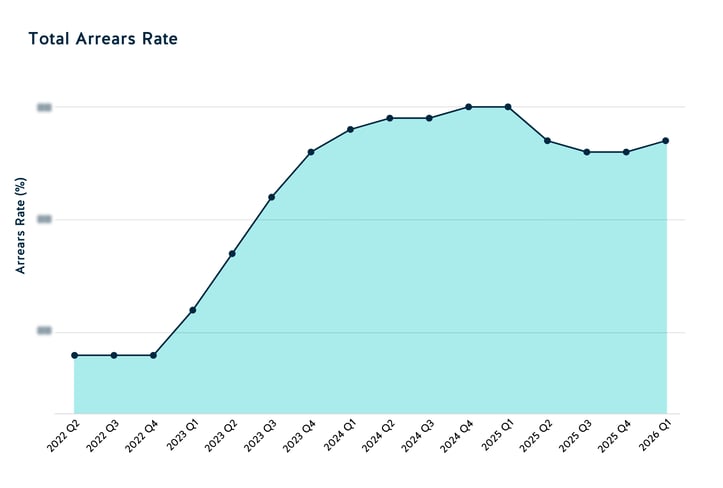
Arrears across Pepper Advantage’s UK mortgage portfolios increased 2.1% in Q1, marking the first deterioration in our portfolio since Q4 2024 (figure 1). This is particularly notable given the profile of our portfolio and suggests that the renewal of inflationary pressures seen has had an impact on household financial resilience.
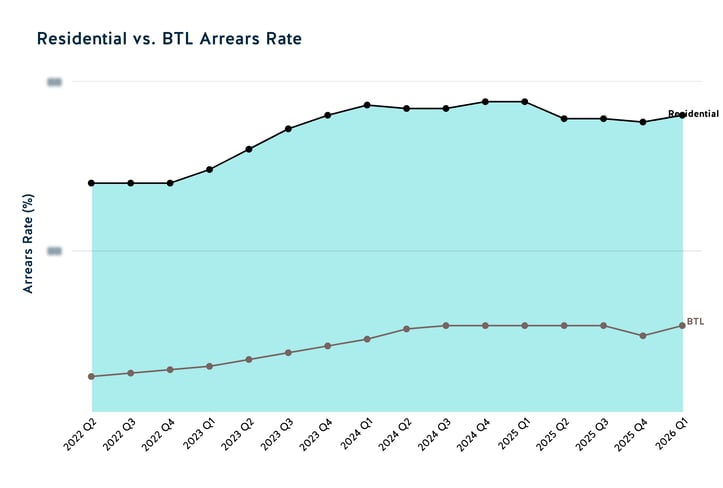
The residential arrears rate increased by 2.0% while the arrears rate for BTL mortgages rose 12.3% (figure 2). The increase in BTL was more pronounced, indicating that combined financial and regulatory pressures are hitting UK landlords as we enter the new year.
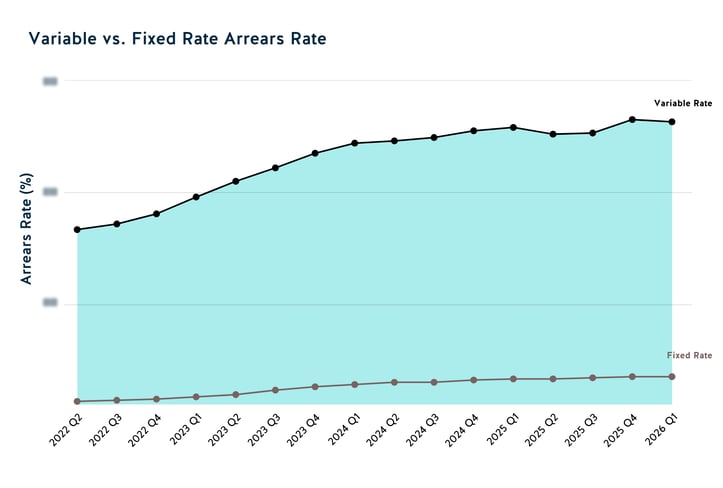
The arrears rate for fixed mortgages grew 1.1% in Q1 2026 while the arrears rate for variable rate mortgages remained essentially flat, registering a negligible drop of -0.6% (figure 3).
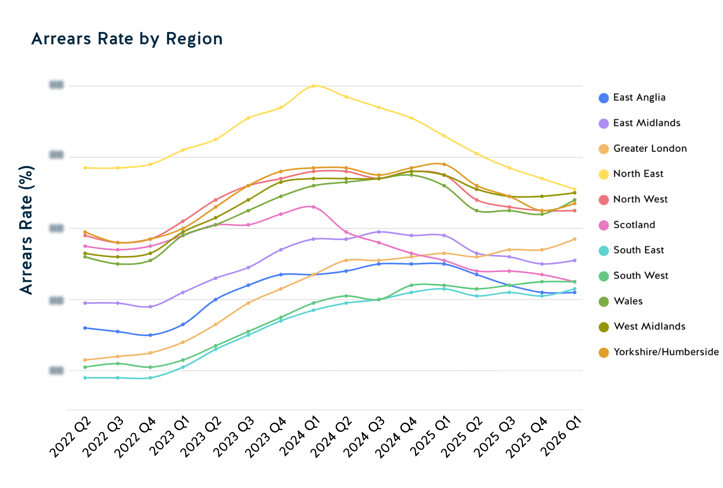
In Q1, every UK region1 saw a quarterly increase in its arrears rate except East Anglia (-0.8%), the North East (-2.7%), and Scotland (-3.0%). The figures range from an increase of 3.1% in both Greater London and the South East to 0.6% in the South West (figure 4).
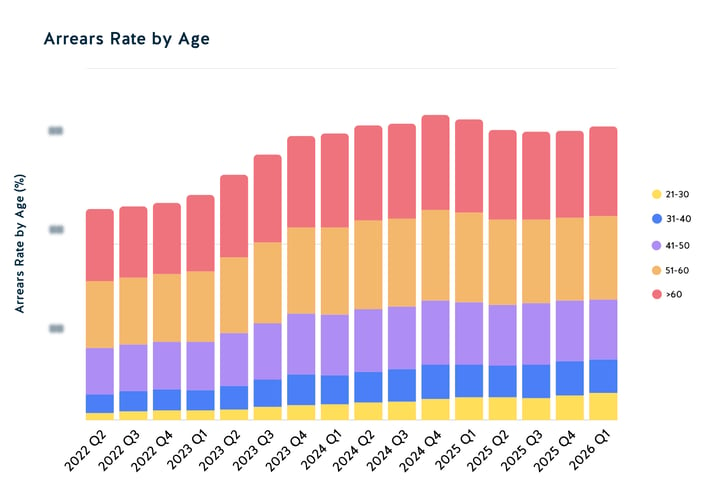
Analysis of arrears data by age shows that the arrears rate has grown in the youngest and oldest age groups. Mortgage owners aged 21-30, while a small cohort, saw their arrears rate jump 11.8%, indicating that financial pressure for Gen Z is more acute as we enter 2026. This compares to a growth rate of 0.2% for those aged 51-60 and 3.0% for those older than 61.
Borrowers aged 31-40 and 41-50 saw their arrears rates decrease by 2.9% and 2.2%, respectively (figure 5).
Missed Payments Jump 17.1%
Direct debit rejections (DDRs), a form of missed mortgage payment and a leading indicator of portfolio health, grew 17.1% in Q1 2026 (figure 6). While an increase in missed payments is typical around the holidays, this is a more dramatic jump than usual driven by a noticeable spike in March.
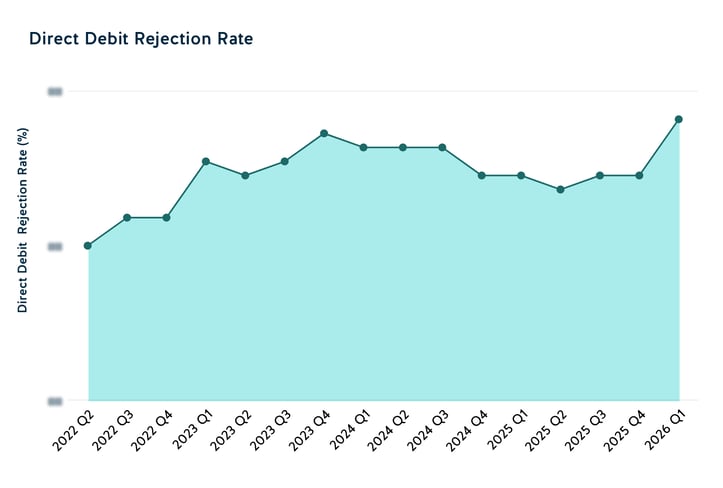
The March increase is consistent with a broader economic deterioration during the same period. CPIH rose to 3.4% in the twelve months to March 2026, up from 3.2% in February according to the Office for National Statistics. With the conflict in Iran applying upward pressure on energy costs, the conditions that helped contain DDRs through last year
are becoming less favourable and the data points to the effects of a shifting economic environment. Whether this change continues into Q2 or is confined to March remains to be seen.
The ratio of missed payments grew or remained steady across every segment of our portfolio in Q1 except BTL, which saw a drop of 12.3%, and across our youngest borrower cohort (figures 7-10).
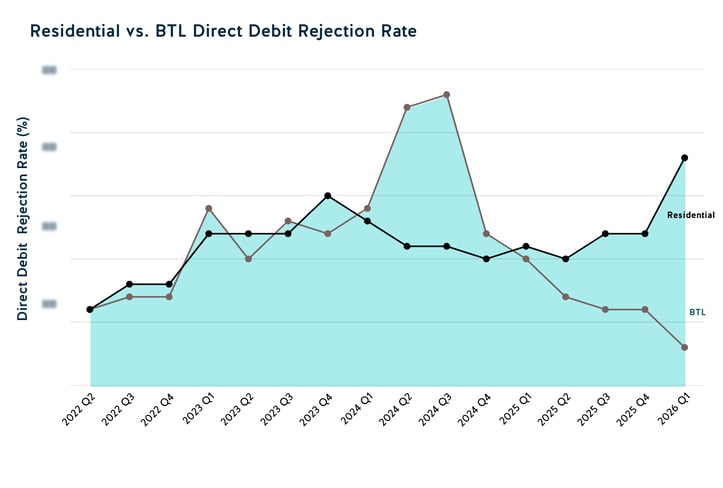
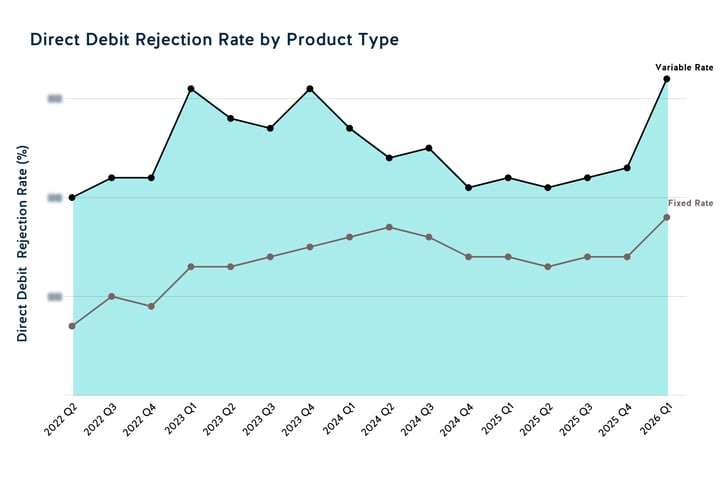
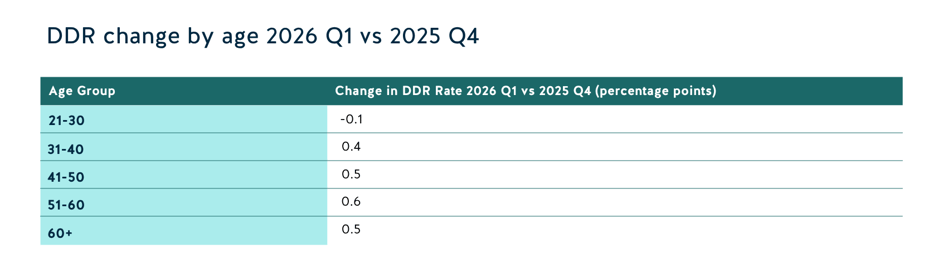
The scale and breadth of the March increase in missed payments sets this quarter apart from usual seasonal norms. Q2 DDR data will be the first meaningful test of whether this spike is a temporary reaction to emerging macro pressures or the beginning of a more sustained trend.
New originations grow steady despite slow start
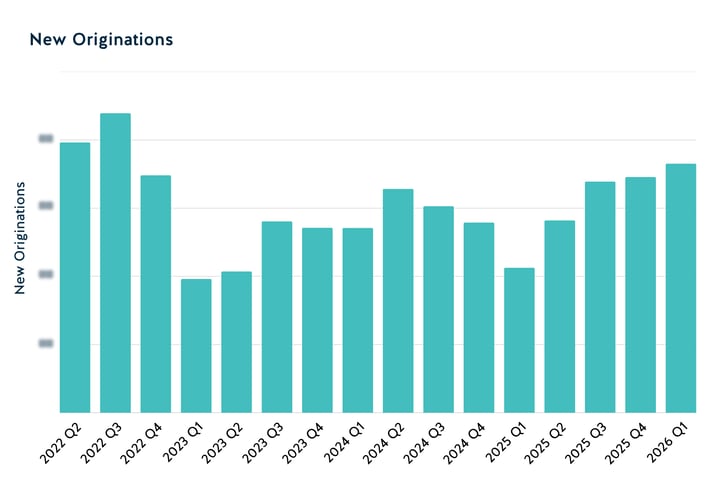
Pepper Advantage manages organic origination for over 10 UK originators, 80% of which are funded by capital markets. New originations grew 5.7% in Q1, with growth accelerating in February and March following a slow January. The origination pipeline looks steady heading into Q2, underpinned by stable demand. However, this demand is sensitive to the shifting macroeconomic outlook and could deteriorate as the effects of the war in Iran impact our portfolio.
One Very Big If
The 2.1% increase in arrears in Q1 marks the first deterioration in our portfolio since Q4 2024. While the reversal is modest in scale, the timing is significant.
The March spike in direct debit rejections coincided with a sharp deterioration in the external environment. Iran closed the Strait of Hormuz in early March, pushing Brent crude past $100 per barrel, and CPIH rose to 3.4% in the twelve months to March, up from 3.2% in February. Our data cannot isolate the effect of the conflict from other cost pressures, but the increase in missed payments in the same month as the energy shock is noteworthy. The Bank of England’s response underlines how quickly the outlook has shifted. At its March meeting, the Monetary Policy Committee voted unanimously to hold rates at 3.75%, compared with February’s 5-4 split.
Notably, our portfolio may be moving ahead of the wider market: UK Finance reports homeowner arrears fell 2% in Q1. The divergence is consistent with our concentration of needs-based borrowers and reinforces the portfolio’s value as a possible early indicator of household stress.
Our portfolio enters Q2 with the gains of 2025 largely intact but its direction of travel reversed. Our Q2 data will show whether March was an isolated reaction or the start of a sustained repricing of household finances.
For more information, please contact us here.
Why Pepper Advantage?
Pepper Advantage is a global credit intelligence company that offers a range of data-led and credit management services via a technology platform that spans Asia, Europe, and the United Kingdom. The company operates in multiple asset classes including residential and commercial mortgages, SME loans, asset financing and leasing, auto and consumer loans, credit cards, retail finance and BNPL, in addition to offering a number of outsourced operational support services to both financial and non-financial clients. It helps investors, financial institutions, fintechs, and banks manage their credit portfolios, reducing the cost and complexities of systems and supporting new non-bank lending, with a particular focus on clients whose customers are underserved by traditional mainstream lenders.
Pepper Advantage's Credit Intelligence platform transforms real-time global data and analytics into valuable information, so that you can make insight-driven decisions to benefit your business and your customers’ financial experiences.
To find out more about Pepper Advantage and our Credit Intelligence platform, click here.
Disclaimer
The material contained in this Article (the “Material”) has been prepared by Pepper Advantage Technologies Limited (“Pepper”).
No representation or warranty, express or implied, is or will be made with respect to the accuracy, completeness, usefulness or merchantability of the Material or its fitness for a particular purpose or regarding the accuracy of the assumptions or the output or the appropriateness of the parameters used in the calculation of any projections or estimates set out herein or the correlation of the data to the actual or expected performance and characteristics of any transaction and no liability or responsibility is or will be accepted by Pepper or any of its affiliates or associated companies or any of their respective directors, officers, employees or agents in relation thereto. Any use of the Material by the Recipient for any purpose whatsoever will be entirely at the Recipient’s own risk.
This Material may utilise information which has not been independently verified and may include that from public sources and third parties (including market and industry data). Further, this Material may contain forward-looking statements, estimates, forecasts and projections that may be affected by inaccurate assumptions, expectations and estimates and by known or unknown risks and uncertainties are predictive in character and inherently speculative and may or may not be achieved or prove to be correct. The Recipient should not place reliance on such statements.
By accepting the Material, the Recipient acknowledges that (a) Pepper is not in the business of providing advice including legal, tax or accounting advice, (b) there may be financial, legal, tax or accounting risks associated with any transaction, (c) it will seek advice from advisors with appropriate expertise to assess relevant risks and independently determine, without reliance upon Pepper, the economic risks and merits of any transaction and that it is able to assume any such risks and that (d) nothing herein shall form the basis of or be relied on in connection with any contract or commitment whatsoever and neither Pepper nor any of its agents accept liability for any loss howsoever arising, whether direct or consequential, from, related to or in connection with any use of the Material or otherwise arising in connection herewith.
Your receipt and use of the Material constitutes notice and acceptance of the foregoing.